


Table of Contents
- Why Senior Dogs Need Different Treats
- Signs of Food Allergies in Older Dogs
- What Makes a Treat Hypoallergenic for Senior Dogs?
- Top 5 Natural Treats for Senior Dogs with Allergies
- Why Single-Ingredient Dog Treats for Allergies Work Best
- Ingredients to Avoid in Senior Dog Treats
- How to Introduce New Treats Safely
- Conclusion
- Frequently Asked Questions
Last Updated: September 26, 2026
Why Senior Dogs Need Different Treats
Older dogs process food differently, and the treats that suited them at three can cause real problems at ten. This guide from Fido's Tasty Treats covers the top 5 natural treats for senior dogs with allergies, chosen for gentle digestion and simple ingredient lists.
Age changes the rules. A senior dog's digestion slows, their teeth wear down, and their immune system becomes more reactive to ingredients it once tolerated. Many owners find that a treat their dog ate happily for years suddenly triggers itching or loose stools.
The fix is not to stop treating your dog. It is to change what you hand over.
PDSA advice on caring for older dogs notes that senior dogs benefit from gentler, easily digested food as their metabolism shifts. Treats should follow the same logic.
Below, we break down the warning signs of allergies in older dogs, what makes a treat genuinely hypoallergenic, and five natural options worth trying. We will also cover the ingredients to avoid and how to introduce anything new without upsetting a sensitive stomach.
Signs of Food Allergies in Older Dogs
Food allergies in senior dogs usually show up as skin problems, ear trouble, or digestive upset rather than a dramatic reaction. Symptoms tend to build slowly, which is why many owners miss them for months.
The tricky part is that allergies can develop at any age. A dog that never reacted to chicken as a puppy can become sensitive to it later in life. If your dog's symptoms started recently, a new treat or food is a likely culprit.
Itchy Skin and Recurring Ear Infections
Persistent scratching, licking at paws, and repeated ear infections are the classic signs of a food allergy in older dogs. The itch often centres on the face, paws, and ears rather than the whole body.
Watch for:
- Constant licking or chewing at the paws
- Red, inflamed skin in the armpits or groin
- Head shaking or scratching at the ears
- A yeasty smell from the ears
- Hair loss or dark, thickened skin from repeated scratching
These signs can also point to environmental allergies, so a vet visit is worth it before you change your dog's whole diet.
Digestive Upset and Behaviour Changes
Loose stools, wind, and vomiting after treats are common signs of food allergies in older dogs. Some dogs also become withdrawn or irritable when their stomach is unsettled.
A dog in discomfort often stops enjoying things they used to. If your senior has gone off their food or seems low, digestion is one of the first things to check.
What Makes a Treat Hypoallergenic for Senior Dogs?
A hypoallergenic dog treat for seniors is one built on a single protein source, with no grains, fillers, or artificial additives, and made from ingredients the dog has not eaten before. Fewer ingredients means fewer chances of a reaction.
Novel proteins matter here. If your dog has eaten chicken and beef for years, a protein like white fish, venison, or rabbit is less likely to trigger a response.
The other factor is how the treat is made. Air-drying and freeze-drying preserve the ingredient without adding preservatives, which suits a sensitive system better than heavily processed options.
Top 5 Natural Treats for Senior Dogs with Allergies
The best natural treats for a senior dog with allergies are single-ingredient, air-dried or freeze-dried options built on novel proteins. Each of the five below avoids the common triggers and stays gentle on older digestion.
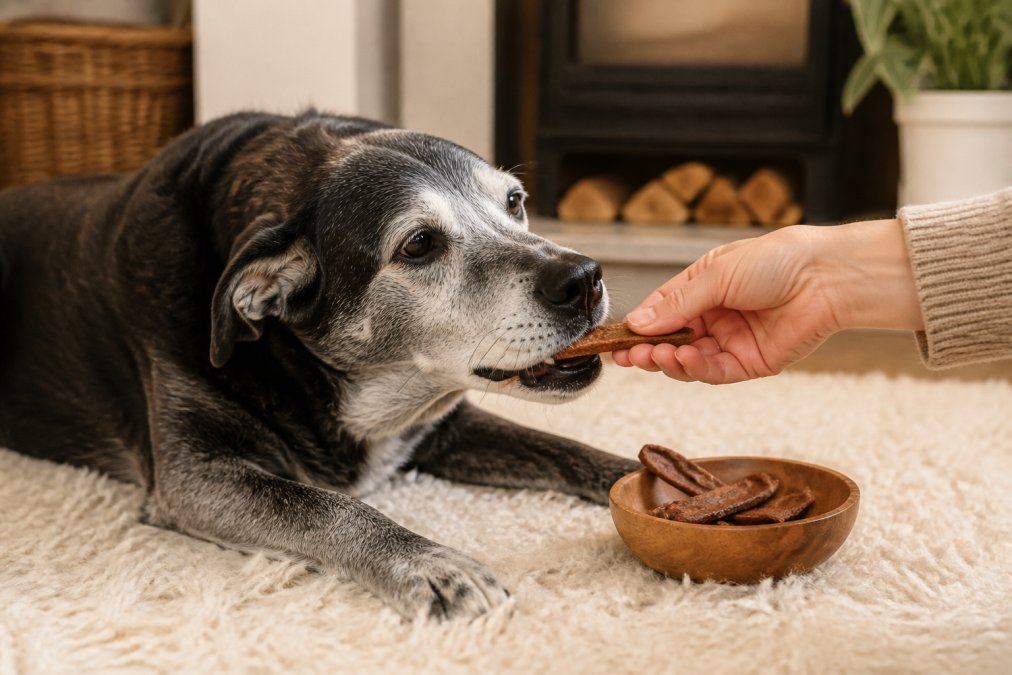
1. Air-Dried White Fish
White fish is one of the safest proteins for an allergic dog because most dogs have never eaten it. Air-drying keeps it light and easy to break into small pieces for older teeth.
It is naturally low in fat, which suits seniors who need to watch their weight. The chewy texture also gives a gentle jaw workout without the hardness of a bone.
2. Dehydrated Sweet Potato Chews
Sweet potato chews are a plant-based option for dogs who react to animal proteins. They are naturally grain-free and provide fibre that helps with digestion.
The chewy strip format lasts longer than a soft treat, which makes it a good choice for a dog that needs to slow down and work for their reward.
3. Air-Dried Venison Bites
Venison is a novel protein for most dogs, so it rarely appears on the list of common allergens. Air-dried venison bites are rich in flavour, which helps fussy seniors stay interested in their treats.
Because venison is lean, it works well for older dogs who need protein without extra fat.
4. Freeze-Dried Turkey Liver
Turkey liver is a single-ingredient treat that dogs find hard to resist. Freeze-drying locks in the natural taste and nutrients without adding anything else.
It is best given in small amounts, as liver is rich. A little goes a long way for a senior dog.
5. Air-Dried Rabbit Chews
Rabbit is another novel protein that suits dogs with allergies to more common meats. Air-dried rabbit chews offer a firmer texture, so they last longer for dogs that like to chew.
For a senior with worn teeth, choose a softer rabbit option or break pieces off to make it easier.
| Treat | Protein Type | Best For | Texture |
|---|---|---|---|
| Air-dried white fish | Fish | Sensitive stomachs, weight control | Light, chewy |
| Dehydrated sweet potato | Plant-based | Protein allergies | Firm chew |
| Air-dried venison | Novel meat | Fussy eaters | Tender bite |
| Freeze-dried turkey liver | Single protein | Training rewards | Soft, crumbly |
| Air-dried rabbit | Novel meat | Strong chewers | Firmer chew |
Why Single-Ingredient Dog Treats for Allergies Work Best
Single-ingredient dog treats for allergies work because they remove the guesswork. When a treat contains one thing, you know exactly what your dog is reacting to if a problem appears.
Multi-ingredient treats make it nearly impossible to trace a reaction. A biscuit with ten components gives you ten suspects.
Keeping it simple also means fewer additives. Preservatives, colourings, and flavourings are common triggers, and none of them appear in a one-ingredient treat.
Ingredients to Avoid in Senior Dog Treats
Certain ingredients are far more likely to trigger a reaction in an allergic senior dog. Knowing them makes label-reading much faster.
Avoid treats containing:
- Common proteins the dog has eaten for years, such as chicken, beef, or wheat
- Grains like wheat, corn, and soy, which are frequent allergens
- Artificial preservatives such as BHA, BHT, and ethoxyquin
- Added colourings and flavourings
- Dairy, which many dogs struggle to digest
- Added sugars or syrups
If your dog has a known trigger, check every label, including treats you assume are safe.
RSPCA guidance on feeding dogs a balanced diet reminds owners that treats should form only a small part of a dog's daily intake, so it pays to make them count.
How to Introduce New Treats Safely
Introduce one new treat at a time and wait several days before trying another. This gives you a clear picture of what works and what does not.
A simple approach:
- Give a single small piece of the new treat
- Watch for any reaction over the next 24 hours
- If all is well, offer a slightly larger piece the next day
- Keep a note of the date and the treat
- Only add a second new treat once the first is confirmed safe
If you see itching, loose stools, or vomiting, stop the treat and note which one caused it.
Conclusion
Finding treats that suit a senior dog with allergies takes a little patience, but the payoff is a happier, more comfortable dog. Stick to single-ingredient, novel-protein options, introduce them slowly, and keep a record of what works.
Frequently Asked Questions
What are the best natural treats for senior dogs with food sensitivities?
Air-dried white fish, dehydrated sweet potato, venison, turkey liver and rabbit are among the best options. They are gentle on digestion and less likely to trigger reactions than treats containing beef, chicken, wheat or dairy. Look for single-ingredient products with no added grains, fillers or artificial preservatives. Introduce one new protein at a time and monitor your dog for at least a week before trying another.
How do I identify common allergens in dog treats?
Read the ingredient list carefully. Common allergens include beef, chicken, wheat, dairy, soy and artificial colourings. If a treat lists 'meat derivatives' or 'cereals' without specifying the source, avoid it. Single-ingredient dog treats for allergies make identification straightforward because there is only one component to track. Keep a simple diary of what you feed and any reactions that follow, which helps you and your vet narrow down the trigger.
Can senior dogs with allergies eat air-dried treats?
Yes, air-dried treats suit most senior dogs with allergies because the drying process uses low heat and no additives. Air-drying preserves nutrients while creating a texture that is firm enough to chew but not so hard it damages worn teeth. Choose single-protein varieties such as fish or venison. If your dog has kidney or heart conditions, check with your vet about protein levels before adding any new treat to their diet.
How can I tell if my senior dog is having an allergic reaction to a treat?
Watch for itching, paw licking, red or inflamed skin, ear infections, vomiting, loose stools or excessive wind within 24 to 48 hours of eating a new treat. Some dogs also become restless or lose interest in food. If symptoms appear, stop the treat immediately and note what you fed. Mild reactions often settle within a few days, but persistent or severe signs need veterinary attention.